Securing your home against aggressive coastal pests requires a disciplined, science-backed environmental strategy. We provide comprehensive pest control service in Corpus Christi to eliminate wood-destroying subterranean insects, persistent indoor roaches, and perimeter rodents.
No forms — call now for a fast, no-pressure quote.
📞 Call (361) 585-4030
Pest Control Service in Corpus Christi is a specialized structural and environmental extermination discipline that eliminates active infestations and establishes exterior chemical and physical barriers tailored to Gulf Coast humidity.
Every service reflects the same meticulous attention to detail — whether it's a single job or a larger pest control service project across Corpus Christi.
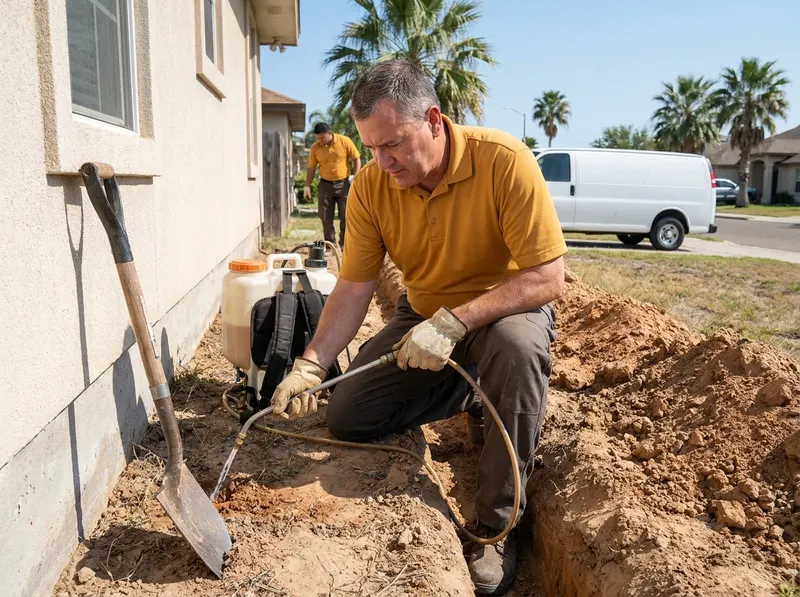
Subterranean termite defense requires deep liquid termiticide trenching and foundation rod injection to establish a continuous non-repellent chemical zone around your home. Technicians excavate continuous trenches along the exterior slab perimeter, saturate the soil down to the foundation footing, and treat structural expansion joints. This eliminates subterranean worker termites traveling between nesting colonies in moist coastal soil and framing studs inside your walls. The non-repellent chemistry ensures foraging insects unknowingly pass through the barrier, transferring the active ingredient back to the central subterranean colony to neutralize the reproductive queen before costly structural wood damage occurs.
View details →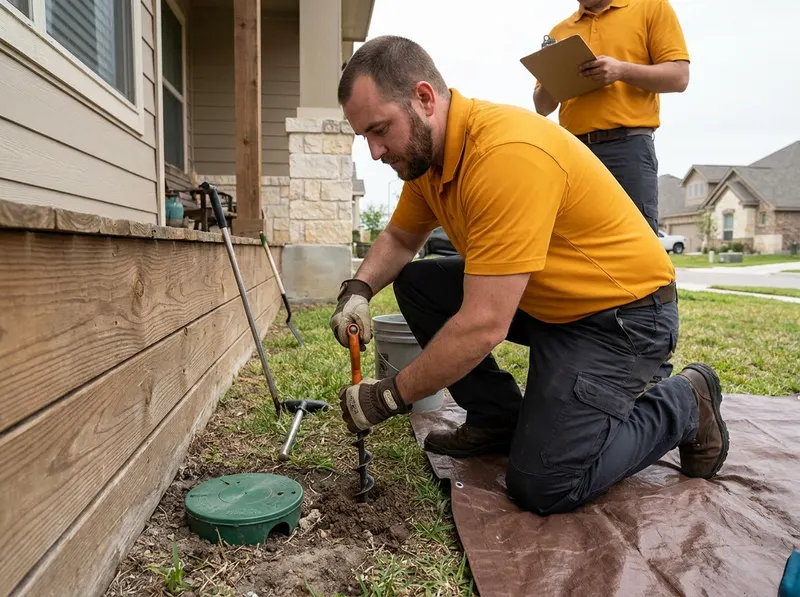
Formosan subterranean termites represent the most aggressive wood-destroying pest along the Texas Gulf Coast, capable of nesting above ground in aerial carton nests without continuous soil contact. Our baiting defense strategy installs low-profile, tamper-resistant monitoring stations at ten-foot intervals around your structural perimeter. These stations utilize purified cellulose matrices impregnated with chitin synthesis inhibitors. Foraging Formosan termites consume the bait matrix and distribute it throughout the primary colony, disrupting their molting cycle and causing complete colony collapse. Technicians inspect, clean, and document station consumption levels during scheduled seasonal defense rounds.
View details →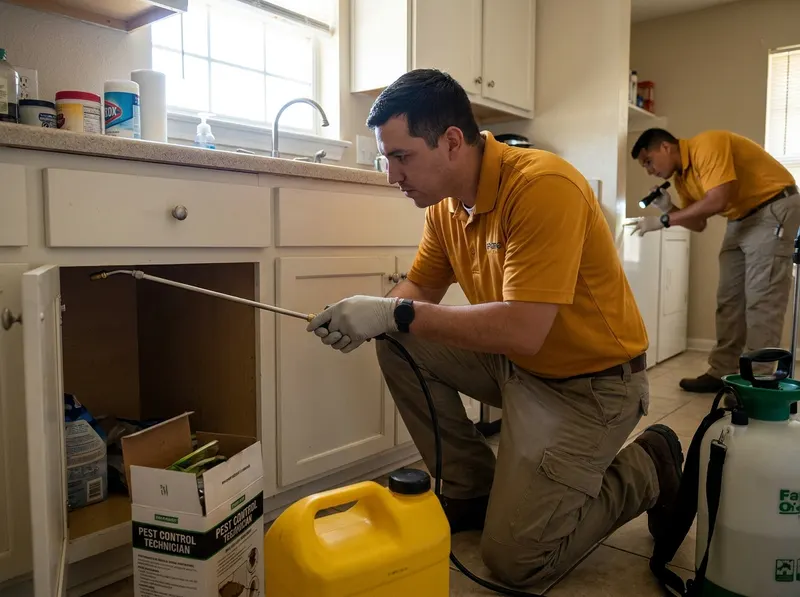
German cockroaches multiply rapidly in warm, high-humidity interior environments such as kitchen cabinetry, dishwashers, and bathroom plumbing chases. Our multi-stage cleanout deploys precision crack-and-crevice gel baits paired with juvenile growth regulators (IGRs) and non-repellent micro-encapsulated sprays. This dual-action protocol sterilizes reproductive adult females, halts nymph development, and leverages secondary bait transfer inside inaccessible wall voids. We never rely on generic over-the-counter foggers that scatter roaches deeper into wall cavities; our technician isolates nesting harborage sites directly behind electrical switchplates, appliance motors, and baseboard junctions to achieve total population collapse.
View details →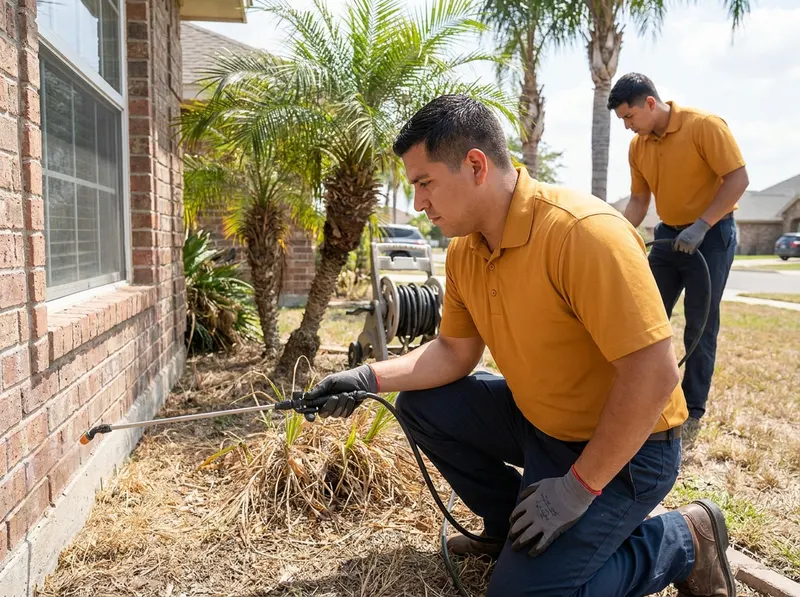
Large outdoor cockroach species—commonly known across South Texas as palmetto bugs or waterbugs—thrive in coastal mulched flowerbeds, palm tree skirts, and municipal storm drains. When ambient summer temperatures climb or heavy rain saturates coastal soil, these insects migrate indoors through weep holes, garage door weatherstripping, and dryer exhaust vents. Our exterior perimeter defense creates a continuous six-foot treated band on the ground and three feet up the exterior foundation wall using waterproof synthetic pyrethroids. Technicians also treat exterior weep holes with moisture-resistant insecticidal dust to stop roaches before they penetrate structural cavities.
View details →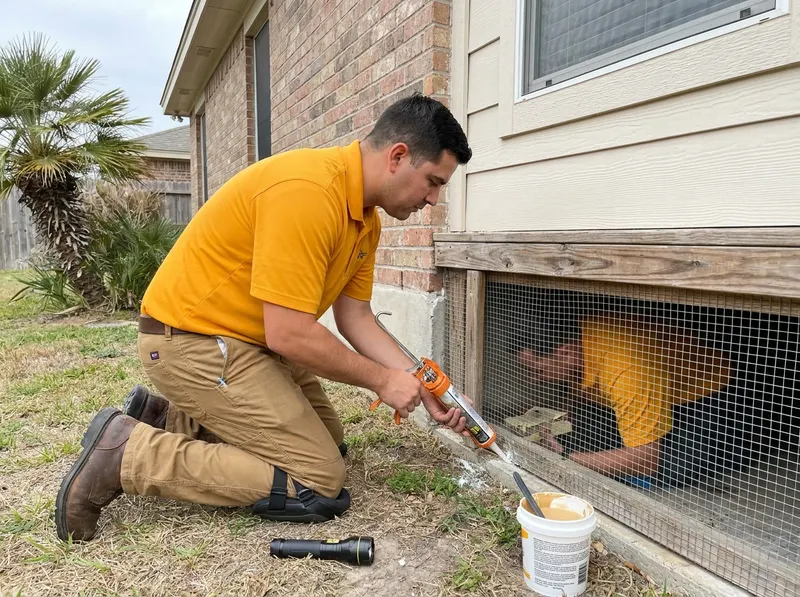
Roof rats and house mice exploit small structural gaps along roof flashings, fascia boards, and crawlspace foundation skirts to nest inside climate-controlled attics. Our structural rodent eradication pairs heavy-gauge mechanical snap-trapping within attic pathways with complete exterior architectural exclusion. Technicians seal all exterior entry voids larger than 1/4 inch using heavy galvanized steel hardware cloth, metal flashing, and structural silicone-polyurethane sealants. This mechanical barrier prevents rodents from gnawing through exterior soffits, safeguarding your attic insulation, ductwork, and electrical wiring from structural fire hazards and biological contamination.
View details →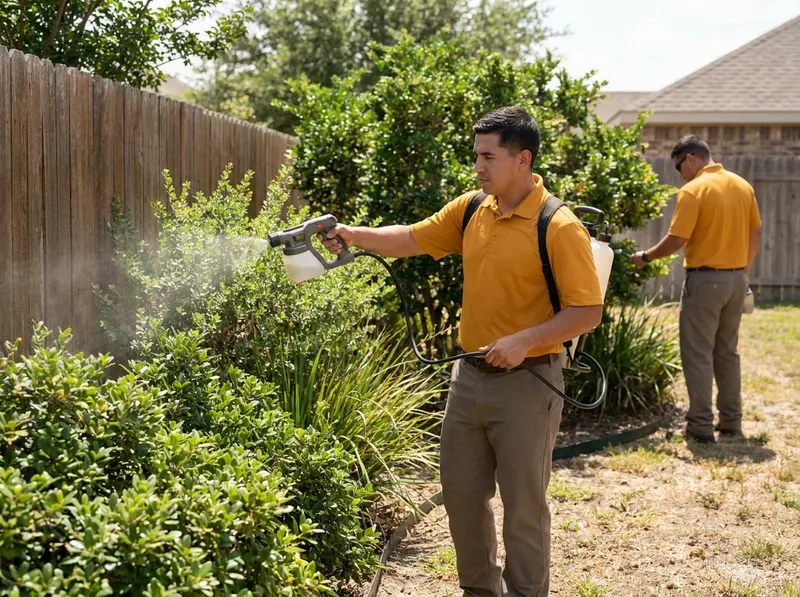
Corpus Christi's coastal wetlands and sub-tropical rainy patterns create ideal breeding conditions for Aedes and Culex mosquito species from early spring into late autumn. Our vector management protocol targets mosquito harborages across dense landscape foliage, fence lines, and shaded patio overhangs using micro-encapsulated botanical adulticides that withstand coastal morning dew and intermittent Gulf squalls. Simultaneously, technicians apply biological Bacillus thuringiensis israelensis (BTI) larvicides to non-draining standing water sources, catching larvae before they mature into biting adults and restoring usability to outdoor patios and pool decks.
View details →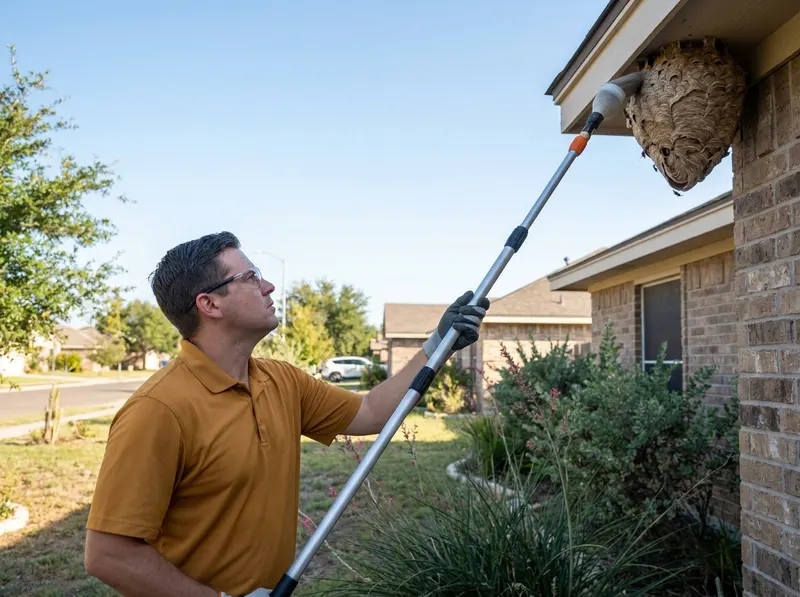
Aggressive stinging insects frequently construct paper and mud nests beneath second-story roof eaves, coastal boat docks, garage overhangs, and outdoor palapa structures. Our stinging insect management deploys high-reach directional knockdown sprays that instantly freeze and neutralize flying hornets and paper wasps from safe working distances. Technicians mechanically scrape down nesting structures, clean adhering mud tubes from siding, and treat the attachment surfaces with residual repellents to prevent secondary queens from rebuilding in the same structural micro-pockets throughout the summer.
View details →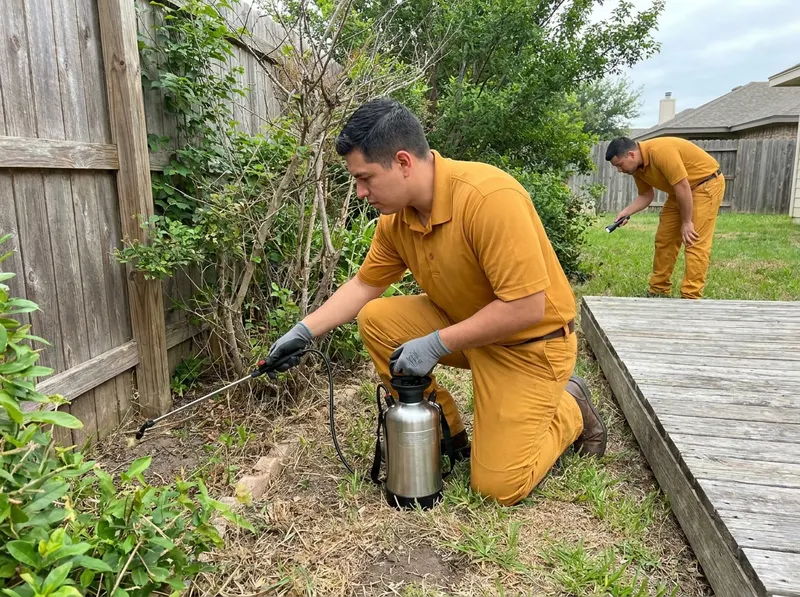
Flea and tick infestations thrive in sandy coastal residential soils and shaded dog runs across Nueces County. Our comprehensive parasite elimination treats both interior carpet fibers and exterior turf zones. We utilize fast-acting adulticides combined with residual insect growth regulators to break the continuous 21-day reproductive cycle. Exterior applications concentrate along shaded fence lines, under deck foundations, and across resting zones beneath trees where tick larvae wait for hosts. Interior protocols penetrate deep into carpet pile and baseboard perimeters to eradicate dormant pupae before they emerge.
View details →Pest Control Service in Corpus Christi is a specialized structural and environmental extermination discipline that eliminates active infestations and establishes exterior chemical and physical barriers tailored to Gulf Coast humidity.
You get a firm, itemized quote for your pest control service before any work begins — no surprises, no pressure.
Careful prep, tidy work, and a full cleanup when we are done. We treat your home and belongings like our own.
The same trusted, background-checked team from the first call to the final check.
Selecting the right pest management approach depends entirely on whether your structure faces an acute biological invasion, chronic coastal perimeter pressure, or hidden structural colonization. If your home has visible indoor German cockroach activity in kitchen cabinets or nesting wasps along roof eaves, choose a targeted corrective knockdown cleanout. If you own a wood-frame or slab-on-grade property in high-humidity zones near Oso Bay Wetlands Preserve or North Padre Island, choose continuous liquid termiticide trenching or exterior bait station installation. The trade-off centers on immediate localized symptom relief versus long-term structural envelope protection; single-visit knockdowns neutralize the insects you see today, whereas complete perimeter barrier systems halt subterranean colonization through foundation expansion joints, brick weep holes, and plumbing chases before pests compromise structural timbers. When addressing rodent activity, property owners must choose between basic interior lethal trapping and complete structural exclusion. If roof rats have entered attic insulation above your garage or living areas, mechanical trapping removes the existing population within five to seven days; however, failing to install 1/4-inch galvanized steel mesh over roofline ridge vents, AC line chases, and crawlspace vents leaves your attic vulnerable to secondary migrations during coastal cold fronts. The trade-off is upfront labor and material cost versus recurring infestation risk. Trapping alone offers a lower initial price point, but comprehensive physical exclusion creates a permanent mechanical barrier that protects electrical wiring and blown-in insulation indefinitely. For outdoor vector management, homeowners evaluate recurring seasonal misting against standalone larvicide applications. If your yard features dense maritime vegetation, shade trees, or proximity to standing water along Oso Creek, an automated or monthly residual foliar mist program provides continuous biting insect suppression from April through October. If your property has minimal landscaping, targeted biological larvicide dunks in drainage basins and rain gutters resolve localized mosquito breeding without wide-area chemical applications. Choosing whole-yard foliar treatments requires ongoing maintenance throughout the Gulf Coast summer, but it ensures your outdoor living spaces remain fully usable during peak humidity cycles.
Every project gets a firm, written price after a free on-site visit. Ranges below for orientation.
Tell us about your pest control service job and we'll send a clear, written quote — usually the same day. Or just call and talk to a real Corpus Christi pro.
(361) 585-4030
Corpus Christi's sub-tropical maritime climate, intense coastal humidity, and sandy Victoria clay soils create aggressive, year-round biological pressure on residential and commercial structures throughout Nueces County. Highly destructive Formosan subterranean termites and sewer-dwelling American cockroaches exploit the natural expansion and contraction of concrete slabs caused by South Texas drought-and-deluge cycles. In historic neighborhoods like Del Mar, Bay Area, and Downtown Marina District, older pier-and-beam foundations with elevated moisture levels provide direct wood-to-ground pathways for wood-boring insects and opportunistic rodents. Meanwhile, slab-on-grade developments across South Side, Kings Crossing, and Calallen experience frequent pest migration through foundation weep holes and plumbing knockouts during prolonged summer heatwaves. Proximity to major coastal waterways such as Oso Bay, Corpus Christi Bay, and the Laguna Madre creates elevated ambient humidity that accelerates the breakdown of low-grade hardware store insecticides. Neighborhoods bordering Oso Bay Wetlands Preserve, Texas A&M University-Corpus Christi, and North Padre Island encounter heavy mosquito reproduction cycles and migratory insect swarms immediately following late-summer tropical depressions and Gulf storm surges. Along major transit corridors including South Padre Island Drive (SPID / TX-358), Crosstown Expressway (TX-286), and Ocean Drive, salt-laden sea air rapidly corrodes standard metal window screens and soffit mesh, creating unmonitored entry points for roof rats and nesting wasps. Establishing a professional chemical barrier fortified against high UV exposure and coastal moisture is the only reliable defense to safeguard local living spaces.
Free estimates for Corpus Christi & the surrounding area.
 Kervano Pest Defense Group